
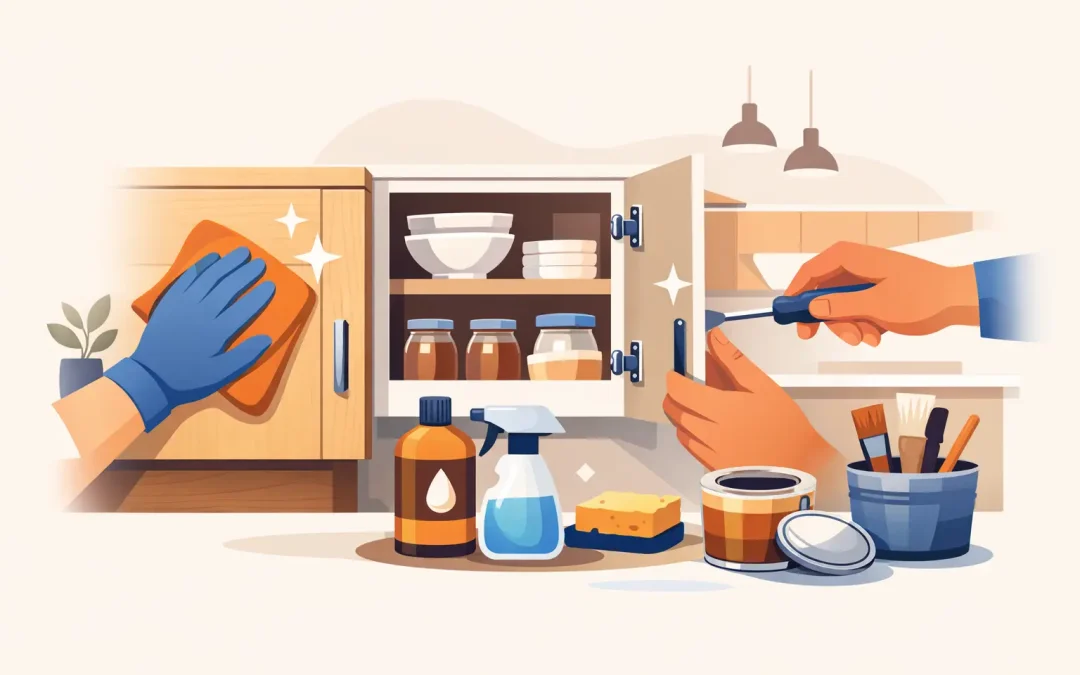
A freshly refinished cabinet door can make the whole kitchen feel brighter, cleaner, and more current. Keeping that finish looking its best does not require a complicated routine, but the right cabinet maintenance tips can prevent the small problems that lead to dull spots, chips, swelling, and expensive touch-ups later.
For Charlotte homeowners, the biggest threats are usually ordinary daily habits: steam from the dishwasher, cooking grease near the range, wet hands in the bathroom, and cleaners that are too harsh for a painted surface. A quality cabinet coating is built to handle real life. Still, even durable furniture-grade finishes last longer when they are cleaned gently and protected from repeated abuse.
Cabinet Maintenance Tips That Protect Painted Surfaces
The simplest rule is also the one most homeowners overlook: clean cabinets often enough that grime never has time to build up. Grease and fingerprints are easier to remove when they are fresh. Once cooking residue hardens around pulls, cabinet edges, and doors near the stove, homeowners are more likely to scrub aggressively – and aggressive scrubbing can dull a finish over time.
Use a soft microfiber cloth lightly dampened with warm water and a small amount of mild dish soap. Wring the cloth out well before wiping. Cabinets should be cleaned, not soaked. Follow with a second clean, damp cloth to remove soap residue, then dry the surface with a soft towel.
This approach works well for routine cleaning in both kitchens and bathrooms. In a busy kitchen, a quick wipe around handles and the range area every week can make a noticeable difference. Bathroom vanities may need attention more often if they are exposed to hairspray, toothpaste, makeup, or splashed water.
Skip abrasive cleaners and rough tools
A painted cabinet finish may look similar to a wall finish, but it receives far more contact, moisture, and friction. Powder cleansers, scouring pads, magic erasers, steel wool, and stiff brushes can leave fine scratches or create a dull patch. The same is true of strong solvents, bleach-based cleaners, ammonia-heavy products, and degreasers not intended for finished cabinetry.
When a mark is stubborn, do not immediately reach for a stronger cleaner. Start with mild soap and water, let the damp cloth rest on the spot briefly, and wipe with light pressure. For an unknown product or cleaning method, test it first in an inconspicuous interior corner. It takes only a minute and can save a cabinet door from permanent damage.
Keep Water and Heat From Wearing Down Your Cabinets
Water is not always obvious. A cabinet can be damaged by a slow leak under the sink, repeated splashing around a faucet, damp dish towels hung over a door, or steam released from a dishwasher. Painted finishes help protect the cabinet surface, but no coating can stop long-term exposure to standing water or moisture getting into seams, joints, and unfinished edges.
Wipe splashes promptly, especially on sink-base doors, vanity cabinets, and cabinet ends next to appliances. Check under sinks every month for a loose supply line, a dripping disposal, or moisture on the cabinet floor. Catching a small leak early is far less disruptive than repairing swollen wood or a damaged cabinet box.
Heat deserves the same attention. Use the range hood when cooking, particularly with frying or high-heat cooking. It helps limit grease film and reduces the heat and humidity that settle on upper cabinets. Avoid placing hot countertop appliances directly under cabinet doors without enough clearance. Coffee makers, air fryers, and toaster ovens can send concentrated steam and heat toward the finish above them.
Give dishwasher steam somewhere to go
After a dishwasher cycle, many homeowners open the door right away to speed drying. That is generally fine, but take a moment to pull the lower rack out carefully and avoid letting a heavy cloud of steam sit against the cabinet panels beside the appliance. If you regularly notice moisture on those surfaces, wipe them dry after unloading.
This is a practical example of why maintenance depends on the layout of your kitchen. Cabinets beside a dishwasher, range, or frequently used sink need more attention than a pantry cabinet across the room.
Treat Doors, Drawers, and Hardware Gently
Cabinet finishes are durable, but the edges of doors and drawer fronts take the most impact. Slamming doors, kicking drawers shut, or repeatedly catching a door on a nearby appliance can eventually chip even a professionally applied coating.
Use handles and knobs rather than pulling doors open from the painted edge. This keeps skin oils, food residue, and fingernail scratches off the finish. If a door rubs against another door, a drawer catches, or a hinge begins to squeak, address it early. A small adjustment can prevent repeated friction from wearing through the paint at one contact point.
Soft-close hinges and drawer slides are helpful, but they are not maintenance-free. Periodically check that screws are snug and hardware is aligned. Do not overtighten screws in older wood, particleboard, or MDF cabinets, since stripped holes can create a larger repair. If hardware feels loose repeatedly, it may need a more durable repair rather than another turn of the screwdriver.
Protect the Finish During Everyday Kitchen Work
A polished kitchen is meant to be used, not treated like a showroom. The goal is simply to give the cabinet finish reasonable protection where daily wear is highest.
Keep dish towels off cabinet doors when they are damp, and do not tape notes, decorations, or temporary organizers directly to painted surfaces. Adhesives can pull at the finish when removed or leave residue that requires harsh cleaning. If you use child safety latches, bumpers, or organizers, choose products designed to be removable and test them in a hidden spot first.
Be careful when moving chairs, trash cans, vacuum attachments, and countertop appliances. Many chips happen during a rushed moment, not during routine cleaning. A small chip should be evaluated early, especially near a sink or a cabinet edge, because exposed material can absorb moisture.
For homeowners with pets or young children, washable cabinet fronts are a major advantage of a professional finish. The trade-off is that frequent spot-cleaning still needs to be gentle. Repeated hard rubbing in one area can change the sheen, particularly on satin or matte finishes.
Know When a Touch-Up Is Enough
Not every mark needs a full refinishing project. A minor surface scuff may clean off, while a small chip can sometimes be carefully touched up with matching material. The key is identifying the problem correctly before trying a repair.
A chip that shows bare wood or exposed substrate should not be ignored. Moisture, grease, and household cleaners can work beneath the surrounding coating, causing the damaged area to expand. Blistering, peeling, cracking, or widespread yellowing are different concerns. They may point to an older coating failure, water exposure, poor adhesion from a previous paint job, or a cleaning product that has damaged the finish.
Avoid using leftover wall paint as a cabinet touch-up. Even when the color looks close, the sheen, durability, and adhesion can differ enough to make the repair stand out. A professional cabinet refinishing team can assess whether a localized repair will blend properly or whether the door needs more complete preparation and recoating.
Respect the Finish After Cabinet Refinishing
Newly refinished cabinets need time to fully cure. They may feel dry long before the coating has reached its full hardness. During the curing period, avoid harsh cleaners, adhesive products, heavy scrubbing, and repeatedly bumping doors with cookware or appliances.
Your refinishing contractor should provide care instructions based on the specific products used, because cure times and cleaning recommendations vary by coating system, temperature, and humidity. That guidance matters. Proper preparation – cleaning, sanding, priming, and fine-spray application – creates the foundation for a long-lasting finish, but thoughtful care helps preserve the result year after year.
If you see a concern after a professional project, take a clear photo and contact the contractor before attempting a repair. Icarus Pro Painters provides a written two-year warranty for peeling, blistering, and chipping, giving homeowners a clear path to address legitimate finish concerns without guessing at the cause.
A cabinet finish should support the way your family lives in the home. Wipe it gently, keep moisture under control, and deal with small issues while they are still small. Those few habits help a refreshed kitchen or bathroom continue to feel like a space you are proud to come home to.
Recent Comments