
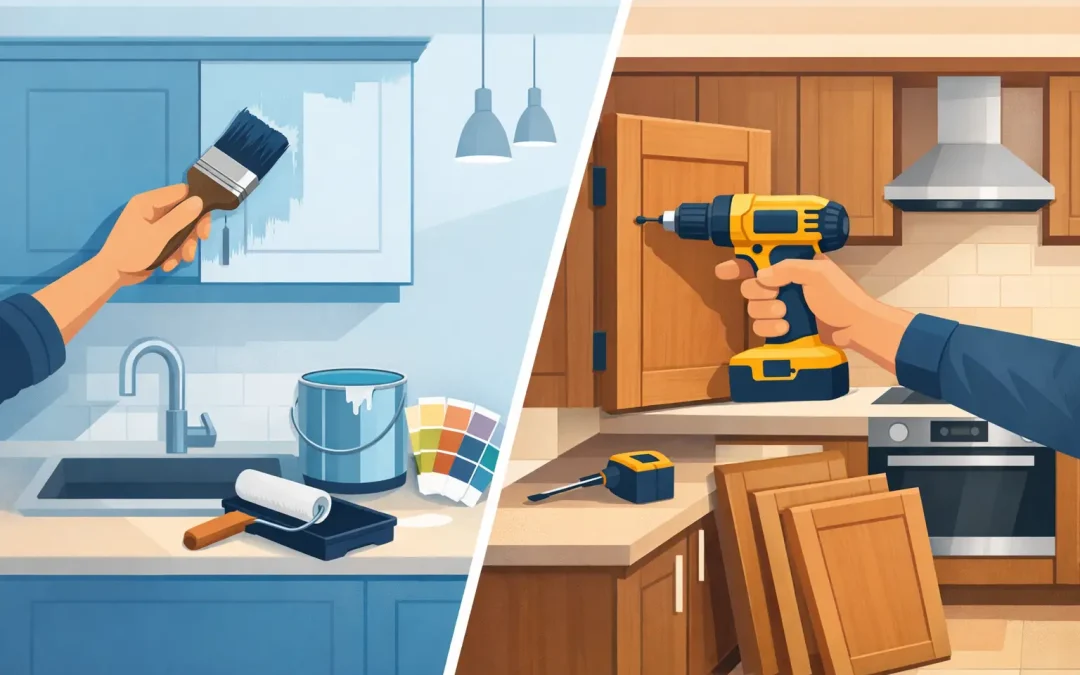
A dated kitchen can make an otherwise well-kept Charlotte home feel tired. If your cabinet boxes are solid but the color is dark, worn, or simply no longer fits your style, choosing to paint kitchen cabinets can deliver the visual change you want without turning your home into a construction zone.
For many homeowners in Ballantyne, South Park, and surrounding communities, cabinet refinishing is the practical middle ground between living with cabinetry they dislike and investing in a full remodel. The key is knowing what a professional finish requires, what it can realistically accomplish, and when replacement is the smarter investment.
Why paint kitchen cabinets instead of replacing them?
Cabinet replacement is not just a cabinet expense. It can involve demolition, disposal, countertop removal, plumbing adjustments, electrical work, backsplash repairs, drywall touch-ups, and weeks of disruption. Those related costs can quickly turn a kitchen update into a much larger renovation.
If the existing cabinet boxes are structurally sound, refinishing can often save homeowners up to 75% compared with full replacement. You keep the layout that already works, avoid unnecessary demolition, and direct more of your budget toward the finish and color transformation you will see every day.
This approach works especially well for real wood cabinets and quality cabinet boxes with doors that still operate properly. A warm honey oak kitchen can become a crisp white kitchen. Heavy espresso cabinets can take on a softer greige or light gray finish. Homeowners who want a more custom look may choose bright upper cabinets paired with a deeper navy, green, or charcoal on the lowers.
The result should not look like a quick coat of wall paint. With proper preparation and furniture-grade coatings, professionally refinished cabinetry has a smooth, durable finish designed for the daily demands of a busy kitchen.
Not every cabinet should be painted
Painting is a high-value option, but it is not the answer to every cabinet problem. An honest contractor should inspect the condition of the doors, boxes, hinges, and surrounding areas before recommending refinishing.
Cabinets may be better candidates for replacement if they have extensive water damage, swollen particleboard, deteriorating drawer boxes, major structural failures, or a layout that no longer functions for your family. Refinishing also will not correct a kitchen that lacks storage, has poorly placed appliances, or needs significant changes to improve accessibility.
There are also material considerations. Solid wood and properly built wood veneers are often excellent candidates. Thermofoil cabinets can sometimes be refinished, but peeling or failed thermofoil needs closer evaluation because the surface must be stable before any coating system is applied. Laminate cabinets can be painted in certain situations with the right adhesion process, though expectations should be discussed clearly in advance.
A free estimate should be more than a price. It should be an opportunity to identify these issues, talk through your goals, and determine whether painting will give you a finish that is worth the investment.
What a durable cabinet refinishing process looks like
The difference between cabinets that look good for a few months and cabinets that continue to look polished comes down to preparation. Kitchen cabinets collect cooking oils, hand residue, cleaning-product buildup, and everyday wear. Paint cannot bond reliably over contamination or glossy surfaces.
Cleaning comes before color
Every cabinet surface needs thorough degreasing and cleaning before sanding begins. This is particularly important around handles, drawer pulls, stove-adjacent cabinets, and doors near trash pullouts. Skipping this step can lead to adhesion problems later, even if the final color initially looks beautiful.
Sanding creates a sound surface
Sanding is not about aggressively stripping every cabinet to bare wood. It is about properly dulling the existing finish, smoothing imperfections, and creating the surface profile needed for primer and topcoats to bond. Dings, scratches, old hardware holes, and small surface flaws should be addressed during this stage.
Primer is protection, not an optional extra
A quality bonding primer helps the finish adhere and can prevent stains or wood tannins from bleeding through lighter colors. This matters when changing dark cabinetry to white, cream, or a pale neutral. Without the correct primer, discoloration can show through later and undermine the finished look.
Fine-spray finishing creates the furniture-grade look
For cabinet doors and drawer fronts, HVLP fine-spray equipment produces a smoother, more even finish than a brush-and-roll approach. Professional spray application helps reduce visible brush marks and creates the clean appearance homeowners expect from a cabinet update.
The coating itself matters just as much as the equipment. Cabinet-grade products are formulated to cure hard, resist yellowing, and stand up to repeated cleaning and contact. A professional team should also protect floors, countertops, appliances, and nearby rooms while the work is underway. Clean masking, organized scheduling, and respect for your home are part of the job.
Color decisions that hold up beyond one trend
The best cabinet color is not always the most dramatic one on a social media feed. It is the color that works with your lighting, countertops, flooring, backsplash, and the way your family uses the space.
White remains popular because it brightens a kitchen and makes rooms feel more open. Warm whites and soft creams can be especially appealing in Charlotte homes with natural wood floors or warmer stone countertops. Greige, mushroom, and muted taupe offer a softer alternative for homeowners who want a neutral kitchen without a stark look.
For a more current, tailored feel, consider a two-tone arrangement. Light upper cabinets can keep the room airy, while a darker island or lower cabinets add depth and hide everyday scuffs more easily. Navy, forest green, charcoal, and deep blue-gray can look refined when paired with the right hardware and warm lighting.
Finish sheen deserves attention, too. Satin is often a practical choice because it has a subtle sheen and is easier to clean than a flat finish. Higher gloss can reflect more light but also shows surface imperfections more readily. A color and finish consultation should account for both appearance and maintenance, not just what is trending this season.
What homeowners should expect during the project
A well-managed cabinet refinishing project should feel organized from the first conversation. Before work starts, you should understand the scope, the preparation steps, the expected schedule, and how your kitchen will be protected. You should also know which items need to be removed from cabinets and countertops before the crew arrives.
There will be some temporary inconvenience. Cabinet doors and drawer fronts may be removed for finishing, and access to the kitchen will be limited at certain stages. Paint and coating products also need time to dry and cure. The finished surface may feel dry before it reaches its full hardness, so careful use during the early curing period is essential.
That said, refinishing is far less disruptive than a full kitchen demolition. You are not waiting on new cabinets, coordinating multiple trades, or rebuilding the room around a new layout. For families who want a meaningful improvement without putting daily life on hold for weeks, that difference matters.
How to protect newly refinished cabinets
Durable does not mean indestructible. Once your cabinets have cured, clean them with a soft cloth, mild soap, and water as needed. Avoid abrasive pads, harsh degreasers, and products that contain strong solvents. Wipe up splatters promptly, especially near the range and sink.
Use cabinet hardware rather than pulling on door edges, and avoid letting appliances or heavy objects bang into drawers and doors. These simple habits protect any finish, including factory-applied cabinetry.
A contractor who stands behind the work should explain care expectations clearly and provide meaningful warranty coverage. Icarus Pro Painters backs qualifying cabinet refinishing work with a written two-year warranty covering peeling, blistering, and chipping, because careful preparation and quality coatings should be matched by real accountability.
A kitchen update that respects your home and budget
Your kitchen is where weekday mornings begin, where guests naturally gather, and where small everyday routines happen. It deserves more than a temporary cosmetic fix. When the cabinets are in good condition, professional refinishing can create the fresh, polished space you want while preserving a layout and budget that already make sense.
The right decision starts with a close look at what you have, not a rushed promise that paint solves everything. If your cabinet structure is sound, a carefully prepared, professionally sprayed finish can give the heart of your home a completely different feel – without the demolition that comes with starting over.
Recent Comments