
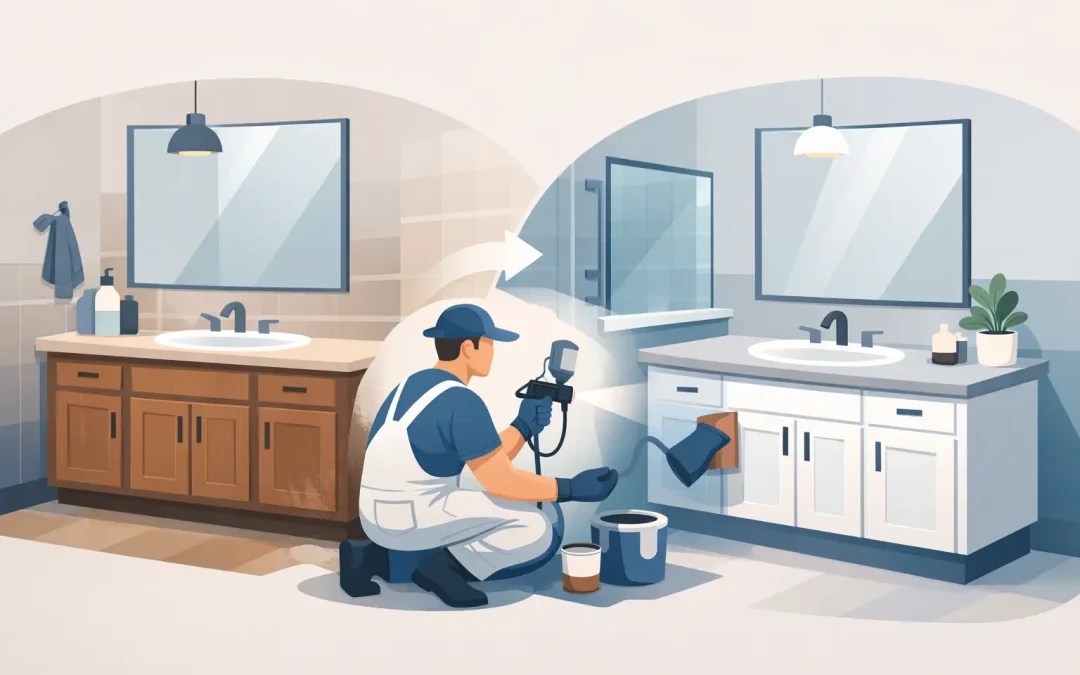
A tired bathroom vanity can make an otherwise well-kept home feel dated. Scuffed doors, yellowed white paint, worn edges near drawer pulls, and an old stain color are hard to ignore every morning. Bathroom cabinet refinishing Charlotte homeowners choose offers a practical way to change that look without tearing out a functional vanity, replacing countertops, or turning a small bathroom into a construction zone.
For many homeowners in Ballantyne, South Park, and across Charlotte, the appeal is straightforward: keep the cabinet boxes that still fit the room and function well, then give the visible surfaces a professionally prepared, durable new finish. Done correctly, cabinet refinishing can create the clean, current look of a bathroom update while saving up to 75% compared with replacement.
When Bathroom Cabinet Refinishing Makes Sense
Refinishing is a strong option when the vanity is structurally sound but visually behind the rest of the home. Solid wood, wood veneer, and properly built MDF cabinet doors can often be refinished successfully when they are not swollen, separating, or extensively damaged by water.
The condition around the sink matters most. A small amount of surface wear can be repaired during preparation. But cabinet replacement may be the better investment if the base has major water damage, persistent mold, soft particleboard, broken cabinet frames, or drawers that no longer operate correctly. A professional should be honest about that distinction. Paint can improve a cabinet’s appearance, but it cannot restore material that has failed.
Refinishing also works well when the layout is still serving your family. If you have enough storage, like the countertop, and do not need to move plumbing or change the vanity size, replacing cabinets can introduce unnecessary cost and disruption. Keeping the existing vanity lets the project focus on the part you see and touch every day: the color, finish, doors, drawers, and hardware.
What a Professional Finish Requires
Cabinet painting is not the same as applying wall paint to a vanity on a Saturday afternoon. Bathroom cabinetry takes regular contact from hands, cosmetics, cleaning products, moisture, and humidity. A finish that looks good on day one but chips at the drawer edges six months later is not a value.
The difference starts with preparation. Cabinet surfaces collect oils, hairspray residue, soap film, and years of household cleaners. Those contaminants must be thoroughly cleaned away before sanding begins. Sanding then creates the proper surface profile for bonding and smooths minor imperfections. Any gaps, dents, or worn areas should be addressed before primer and finish coats go on.
A quality bonding primer gives the coating system a stable foundation. After that, professional furniture-grade coatings are applied in controlled, even coats. HVLP fine-spray equipment is especially important for doors and drawer fronts because it produces a smoother, more consistent finish than brushing and rolling alone. The result should feel refined, not heavy, streaky, or textured like a painted wall.
Careful masking and jobsite protection matter just as much. A bathroom is connected to the rest of your home, often near bedrooms and finished flooring. The contractor should protect surrounding surfaces, control dust, keep the work area organized, and communicate clearly about access to the room while the project is underway.
Why Bathroom Durability Depends on Details
The best cabinet coatings are designed to resist fading, flaking, and ordinary household wear, but homeowners still need realistic expectations. No painted finish is indestructible. Repeated standing water around the sink base, aggressive abrasive scrubbers, and slamming drawers can damage almost any coating.
That is why preparation and application technique cannot be skipped. Door edges, drawer fronts, recessed profiles, and the area around knobs all need consistent coverage. Sufficient dry and cure time also protects the final result. A professional contractor does not rush cabinets back into heavy use before the finish has had appropriate time to harden.
For added confidence, ask what warranty is included and what it covers. A written warranty covering peeling, blistering, and chipping shows that the contractor stands behind the coating process, not just the appearance of freshly painted doors.
Choosing the Right Vanity Color and Finish
Color can make a compact bathroom feel brighter, calmer, and more intentional. Soft whites remain popular because they work with many countertop materials and make a room feel clean without demanding a full renovation. Warm whites are often a better choice than stark bright white when tile, flooring, or walls have cream or beige undertones.
Light greige, taupe, and muted sage can add warmth while still feeling timeless. For homeowners who want more contrast, a deep navy, charcoal, or black vanity can ground a bathroom with light walls and countertops. Dark colors look especially polished with brushed brass, polished nickel, or matte black hardware, depending on the other finishes in the room.
The right choice depends on lighting. A color that looks crisp in a sunny showroom can feel much darker in a bathroom with limited natural light. Before committing, consider the vanity color beside the tile, countertop, wall paint, and metal fixtures. A color and finish consultation can prevent the common mistake of choosing a shade that fights the permanent elements already in the space.
Sheen deserves consideration too. A low-luster finish can feel modern and forgiving, while a higher sheen reflects more light and can make a small vanity stand out. Higher sheen also reveals surface imperfections more readily, which makes detailed preparation even more important.
Refinishing Versus Replacing a Bathroom Vanity
Full replacement makes sense when you want to alter the room’s layout, add storage, change the counter depth, or correct structural damage. It can also be the right call when a vanity is a low-quality unit that will not hold up well long term.
However, replacement rarely ends with the cabinet purchase. Demolition, disposal, plumbing changes, countertop installation, backsplash repairs, drywall touch-ups, flooring transitions, and electrical adjustments can quickly expand the budget and schedule. Even a small bathroom can become unavailable for longer than expected.
Refinishing avoids much of that domino effect. There is no cabinet demolition and no need to disturb a countertop that is still in good condition. For homeowners who want a meaningful visual upgrade without a major remodel, that reduction in disruption is often as valuable as the savings.
The trade-off is that refinishing keeps the existing cabinet style and footprint. It can dramatically update color and finish, but it will not create additional drawers or turn a standard vanity into a custom-built piece. New hardware, improved drawer pulls, and an updated mirror or light fixture can help the finished space feel more complete without expanding the project into a full renovation.
Questions to Ask Before Hiring a Cabinet Refinisher
A clear estimate should explain what surfaces are included, how the cabinets will be prepared, what coating system will be used, and whether doors and drawer fronts will be sprayed. It should also address scheduling, protection of nearby surfaces, and how long the bathroom will be affected.
Ask whether the contractor specializes in cabinet refinishing rather than treating it as an occasional add-on to wall painting. Cabinets require a different level of preparation, product knowledge, and finish control. Review photos of completed bathroom vanities, not only kitchen projects, since moisture exposure and room size create different jobsite considerations.
It is also reasonable to ask about communication. Homeowners should know when the crew will arrive, what work is planned each day, and when they can expect to use the space normally again. Local accountability matters when someone is working inside your home, especially on a finish you will see every day.
At Icarus Pro Painters, the goal is not simply to change a vanity color. It is to deliver a carefully prepared finish that makes the bathroom feel like it belongs in the home you have worked hard to maintain. If your cabinet boxes are sound, a well-planned refinishing project can be the refresh that turns a dated bathroom into a space you are happy to start and end your day in.
Recent Comments