
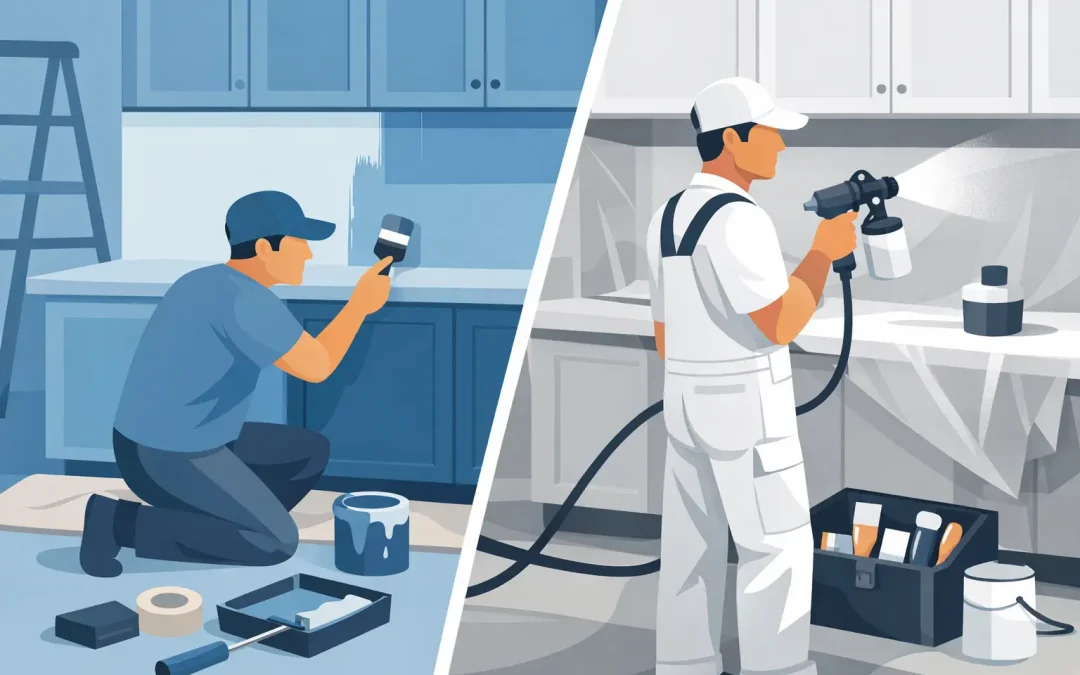
A kitchen can feel dated long before the cabinets stop functioning. If your cabinet boxes are solid but the finish is dark, worn, yellowed, or simply no longer fits your home, repainting can make a dramatic difference without the demolition and expense of replacement. The question is whether DIY versus professional cabinet painting makes the most sense for your Charlotte home.
A do-it-yourself project can look appealing at first, especially when the goal is to save money. Professional refinishing costs more upfront, but it also brings the equipment, prep work, product knowledge, and accountability needed for a finish that holds up in one of the busiest areas of the home. The better choice depends on your cabinet condition, your expectations, and how much risk and disruption you are willing to take on.
DIY Versus Professional Cabinet Painting: The Real Difference
The most visible difference is often the final finish. The bigger difference, however, happens before the first coat of paint is applied.
Cabinets collect cooking oils, hand residue, cleaning-product buildup, and moisture over years of daily use. Paint does not reliably adhere to those contaminants. A cabinet project that begins with a quick wipe-down and a coat of paint may look acceptable for a short time, then begin to chip around handles, peel near the sink, or show uneven sheen on doors and drawer fronts.
A professional cabinet refinishing process is built around preparation. At Icarus Pro Painters, that means carefully cleaning the surfaces, sanding for proper adhesion, addressing imperfections, applying the right primer, and using durable furniture-grade coatings. Doors and drawer fronts are fine-sprayed with HVLP equipment to create a smooth, factory-like appearance that is difficult to achieve with a standard brush or roller.
DIY painting is not automatically a bad choice. It can work for a homeowner with significant painting experience, a controlled workspace, plenty of time, and realistic expectations. But cabinet painting is less forgiving than painting walls. Every brush mark, dust speck, dripped edge, and missed area is at eye level every time you open the kitchen.
What DIY Cabinet Painting Really Requires
The cost of a DIY project is more than the price of paint. Homeowners may need cleaning products, degreasers, sanding materials, wood filler, caulk, primer, cabinet-grade paint, rollers, brushes, masking supplies, drop cloths, a sprayer, spray shelter materials, protective gear, and hardware tools. A sprayer can improve the finish, but it also requires practice, thorough masking, ventilation, and careful cleanup.
Time is another consideration. Removing doors and drawer fronts, labeling every piece, cleaning, sanding, repairing, priming, painting multiple coats, allowing proper cure time, and reinstalling hardware can take several weekends. Kitchens are hard to put on pause, particularly for busy families. When doors are stacked in a garage or dining room and countertops are covered for days, a budget project can start to feel expensive in other ways.
There is also a learning curve with coating products. Some paints are easier to apply but do not have the hardness needed for cabinet doors. Others provide better durability but require more precise conditions, recoat timing, or spray application. If the wrong primer or topcoat is used, the finish may not bond well to previously painted surfaces, stained wood, laminate, or thermofoil.
DIY can be a reasonable route when cabinets are in a low-use room, such as a laundry area, when the project is small, or when a homeowner enjoys detailed hands-on work. It becomes more challenging when the kitchen has many doors, raised-panel details, visible grain, prior coating failures, or a busy household that needs the space back quickly.
Why Professional Refinishing Costs More Upfront
Professional cabinet painting is not simply paying someone else to apply paint. You are paying for a repeatable process designed to reduce failure points.
Experienced cabinet painters know where grease hides, how much sanding is needed, which repairs should be completed before priming, and how to protect floors, countertops, backsplashes, appliances, and adjacent rooms. They also know how different cabinet materials respond to preparation and coatings. That knowledge matters when a smooth white finish is being applied over dark oak, or when a homeowner wants a modern two-tone kitchen with light upper cabinets and deeper lower cabinets.
Spray equipment is another meaningful advantage. HVLP fine-spray application helps create an even finish across broad door faces, edges, and profiles. It is not magic, and spraying does not replace careful prep. But when paired with the proper cleaning, sanding, priming, and coating system, it produces a more refined result than most brush-and-roller applications.
A professional team also brings organization. Doors and drawers are labeled, the work area is protected, scheduling is clear, and the project follows a planned sequence. That matters in homes throughout Charlotte, Ballantyne, and South Park, where homeowners want an updated kitchen without turning daily life into a long construction project.
Just as important, reputable contractors stand behind their work. A written warranty covering issues such as peeling, blistering, and chipping gives homeowners a level of protection that a DIY project cannot provide. It also reflects confidence in the prep work and products behind the finish.
Cost Savings Should Include the Cost of Doing It Twice
Cabinet refinishing can save homeowners up to 75% compared with full cabinet replacement, depending on the scope and materials involved. That is why it is such a strong option when cabinet layouts work well and the boxes remain structurally sound.
The comparison between DIY and professional work should be more specific than “paint costs less than hiring.” A DIY project may save money when everything goes smoothly. If adhesion problems, roller texture, visible brush marks, overspray, or damaged doors require correction, those savings can disappear quickly. Refinishing a failed cabinet paint job often takes more preparation than doing it correctly the first time.
Professional work is especially valuable when the goal is to improve resale appeal, create a polished design statement, or make a kitchen feel current for years rather than months. Buyers and guests may not know how the cabinets were painted, but they can see the difference between a careful finish and a rushed one.
How to Decide Which Option Fits Your Home
Start with an honest look at your cabinets and your expectations. If you want a simple color change in a small, low-traffic space and enjoy detailed projects, DIY may be worth considering. Test your process on one door first, including cleaning, primer, paint, and cure time. A sample door will reveal far more than a paint swatch.
Professional refinishing is usually the stronger choice when you want a furniture-grade finish, have a larger kitchen or bathroom, need help selecting colors, or cannot live with a lengthy trial-and-error process. It is also the better route for cabinets with heavy wear, previous paint, stains, repairs, detailed door profiles, or challenging materials.
Before choosing a contractor, ask about the preparation process, coating products, spray method, protection of surrounding surfaces, expected schedule, and warranty. Clear answers are a good sign. Cabinet painting should never be treated as a quick cosmetic coat. The durability of the result is decided by the work that happens before the color goes on.
Your cabinets frame the heart of your home every day. Whether you choose DIY or professional refinishing, choose the path that gives you confidence when the kitchen is busy, the light hits the doors, and the finish needs to look just as good as it did on day one.
Recent Comments