
A kitchen can feel dated long before its cabinets stop functioning. That is why the best cabinet trends are not simply about chasing a color seen online. For Charlotte homeowners, the right update should make the room feel current, work with the home’s architecture, and hold up to family life for years to come.
A professional cabinet refinishing project gives you room to make that change without tearing out solid cabinet boxes, managing demolition, or taking on the cost of a full replacement. The goal is not to make every kitchen look the same. It is to choose a finish, color, and level of contrast that fits how you actually live in the heart of your home.
Cabinet Trends Moving Beyond All-White Kitchens
White cabinets remain popular for good reason. They reflect light, make kitchens feel open, and pair easily with changing decor. But the all-white kitchen is no longer the only safe choice. Many homeowners are moving toward warmer, softer neutrals that create a more collected and comfortable look.
Cream, warm white, mushroom, putty, and light greige are showing up in kitchens where bright white once dominated. These shades work especially well in Charlotte homes with warm wood flooring, brass fixtures, natural stone, or abundant afternoon sunlight. The difference may seem subtle on a paint chip, but a warm white can prevent a kitchen from feeling cold or overly stark.
The practical consideration is undertone. A cabinet color that looks clean in a showroom can appear yellow beside a cool gray backsplash, or gray against a warm cream countertop. Before refinishing begins, color should be considered alongside the fixed elements you are keeping: countertops, backsplash tile, flooring, wall color, and appliances.
Two-Tone Cabinets Add Contrast Without Overdoing It
Two-tone cabinetry continues to be one of the most useful design directions because it gives a kitchen depth without making it feel busy. A common approach is lighter upper cabinets with a darker or richer color on the base cabinets. It keeps the upper part of the room visually open while giving the island or lower cabinets a grounded presence.
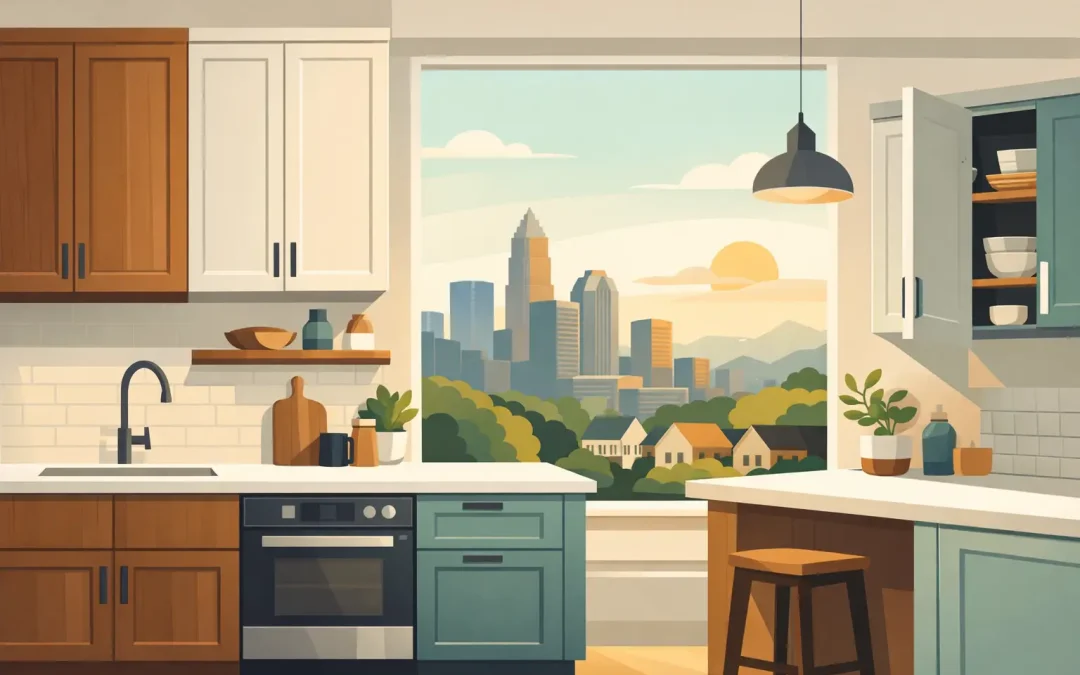
Deep navy, muted blue-green, charcoal, olive, and warm taupe are strong options for lower cabinets. They can bring personality to a kitchen that otherwise has neutral counters and walls. In a larger kitchen, a darker island can also create a natural focal point without requiring a full room redesign.
There is a trade-off. Very dark colors can show dust, fingerprints, and small scuffs more readily than mid-tone shades, particularly on frequently used lower cabinets. That does not mean homeowners should avoid them. It means the coating system, surface preparation, and day-to-day expectations matter. A durable furniture-grade finish is what helps a bold color remain a good decision after the initial excitement wears off.
A Painted Island Can Be the Right First Step
Not every kitchen needs two colors throughout. If you are unsure about committing to dark base cabinets, painting only the island is a smart middle ground. It adds contrast, defines the gathering space, and lets you keep the perimeter cabinets light. This is often a strong option for homeowners who want a trend-aware update while protecting broad appeal for future resale.
Warm Wood Looks Are Returning in a Refined Way
Wood is back in kitchen design, but not in the heavy, orange-toned style many homeowners are trying to leave behind. Current wood-inspired kitchens lean toward natural oak, walnut tones, and calmer grain patterns. The look is warm, tailored, and often paired with painted cabinets rather than used wall to wall.
If your existing cabinets have dated stain but are structurally sound, refinishing in a painted finish can be a more predictable path than attempting to transform the wood tone. Paint creates a consistent, durable appearance and allows more flexibility with color. If you love the character of real wood, consider keeping a wood feature on an island, open shelving, or a built-in while updating the surrounding cabinets in a complementary paint color.
The best choice depends on the cabinet material and condition. Solid wood doors, veneer, laminate, and previously painted cabinets each require a different preparation approach. A close inspection should happen before anyone promises a specific result.
Softer Color Is Replacing Short-Lived Statements
Homeowners are becoming more selective about dramatic cabinet colors. Bright cobalt, intense emerald, and very black cabinetry can look striking in the right room, but they are not always easy to live with over time. The cabinet trends with the most staying power tend to be colors with some softness and natural warmth.
Muted sage, smoky blue, clay, dusty green, and medium-depth taupe can bring color into a kitchen while still feeling calm. These shades are flexible enough to work with brushed nickel, matte black, brass, and mixed-metal hardware. They also complement the brick, hardwood floors, and traditional details found in many Charlotte-area homes.
Color does not have to cover every cabinet door to make an impact. A colored vanity in a bathroom, a painted island, or a lower-cabinet contrast can refresh a space without making it feel tied to one moment in design.
Hardware and Sheen Matter as Much as Paint Color
A cabinet update is a system, not just a color change. New hardware can make existing door styles feel more intentional, while a dated pull can make even freshly painted cabinets feel unfinished. Warm brass, aged bronze, matte black, and satin nickel all have a place, depending on the rest of the room.
Simple bar pulls and modest knobs tend to age well because they do not compete with the cabinetry. Oversized or highly decorative hardware can work in a specific style, but it should be selected carefully. Door proportions, drawer width, and the finish of nearby faucets and lighting all play a role.
Sheen deserves the same attention. A high-gloss cabinet finish can show imperfections and reflect every source of light. A completely flat finish is harder to clean in a kitchen. For most homes, a low-luster furniture-grade finish offers the right balance: polished enough to look refined, practical enough for regular use, and easier to maintain than a fragile decorative coating.
Which Cabinet Trends Work With Existing Cabinets?
The good news is that many current looks do not require new cabinets. If the boxes are solid, the doors operate properly, and the layout still serves your family, cabinet refinishing can deliver the visible transformation homeowners want at a fraction of replacement cost. In many cases, refinishing can save up to 75% compared with installing new cabinetry.
The quality of the result depends on the work behind the finish. Cabinets should be thoroughly cleaned to remove cooking residue, sanded for adhesion, repaired where needed, primed, and spray-finished with a durable coating. Fine-spray HVLP equipment helps create the smooth, furniture-like appearance homeowners expect from a professional project.
Shortcuts show up quickly on cabinets. Paint can chip around handles, peel near the sink, or feel rough to the touch when surfaces are not properly prepared. That is why the process matters more than a quick before-and-after photo. A well-finished cabinet should look good from across the kitchen and still feel smooth when you open the door every morning.
Choose a Trend That Fits Your Home, Not Just Your Feed
Before choosing a color, stand in the room at different times of day. Look at the fixed materials you are not replacing. Think about how often the kitchen is used, whether you have young children, and whether you want the island to be a statement or the room to stay quiet and classic.
For homeowners who want confidence before committing, a detailed color and finish consultation is worth the time. At Icarus Pro Painters, the focus is on helping homeowners find an option that feels updated now without sacrificing durability, clear communication, or the character of the home.
The most successful cabinet update is usually not the loudest one. It is the one that makes you walk into your kitchen, notice how much better it feels, and stop thinking about what needs to be changed next.
Recent Comments